Botswana's Diamonds gives it Dutch Disease
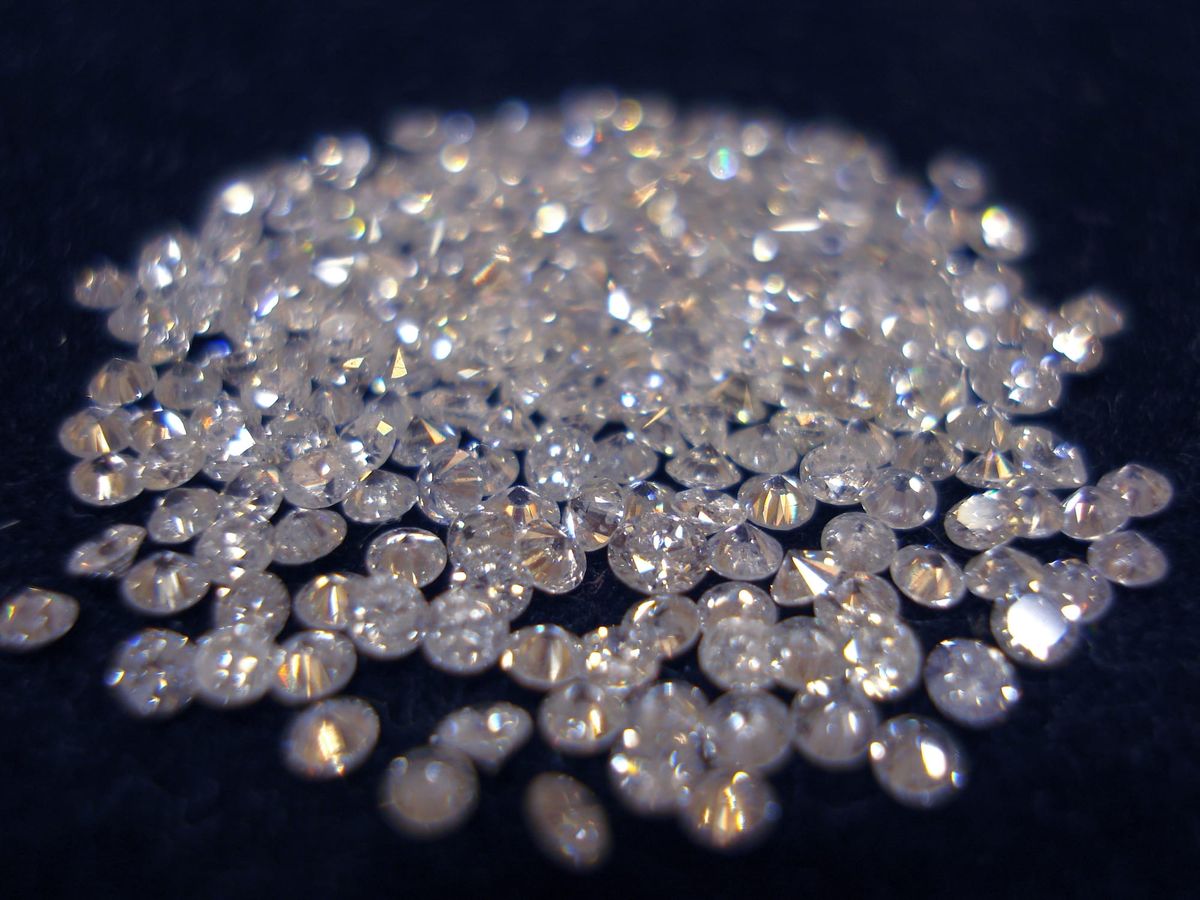
Bogolo Kenewendo, Botswana's minerals minister, wore a diamond pendant to the Mining Indaba in Cape Town this February. It was not subtle. Neither was the message. Botswana wants to buy more of De Beers — the company whose stones paid for the roads, the schools, the hospitals, the entire middle-income existence of a nation that was, at independence in 1966, one of the poorest on Earth.
The pendant glittered. The national accounts did not. Botswana's economy contracted in 2024 and again in 2025 — a 56 percent collapse in diamond output in the final quarter alone. The sovereign wealth fund, once the envy of the continent, has been virtually emptied. Foreign reserves have halved since 2017, down to $3.8 billion. Both Moody's and S&P downgraded the country last year. Debt is climbing toward 40 percent of GDP, up from near zero a decade ago. The budget deficit for 2026-27 is projected at 8.9 percent. Diamonds still account for some 80 percent of exports.
Into this the government proposes to increase its 15 percent stake in De Beers — ideally to a controlling share — just as Anglo American, De Beers' parent, tries to offload the unit at a valuation of $2.3 billion, down from $12.75 billion in 2011.
The logic is not irrational. It is, in fact, the logic that built the country. In 1969, three years after independence, geologists found diamonds at Orapa. The government of Seretse Khama did something almost without precedent in post-colonial Africa: it negotiated well. The Debswana joint venture — fifty-fifty with De Beers — channelled mineral rents into public investment rather than presidential palaces. Between 1970 and 2000, Botswana grew at 10.6 percent annually, faster than China. The model worked because the government treated diamonds as a windfall to be converted into human and physical capital, not a permanent income stream.
That discipline has eroded. The conversion never fully happened. Diamonds still generate a third of government revenue and dominate exports. The cutting and polishing factories established in Gaborone after a 2005 agreement with De Beers employ roughly 3,000 people at wages between $113 and $303 a month. The downstream industry Botswana hoped would capture more of the value chain has not delivered the returns its architects promised. The profitable part of De Beers remains what comes out of the ground, not what happens to it afterward.
Meanwhile the ground itself is shifting. Angola surpassed Botswana as Africa's largest diamond producer by value in 2024, and Angola's state diamond company has submitted its own bid for a stake in De Beers. Lab-grown diamonds now take roughly 20 percent of the global market by value and up to half the American engagement ring market by volume. They are cheaper, chemically identical, and marketed as greener. The natural diamond, that old condensation of geological time and colonial glamour, is losing the argument with a factory in Surat.
The choice facing Botswana's President Duma Boko is the kind that resource-dependent nations confront when the resource turns against them. He can double down — buy a larger share of De Beers, assert sovereign control over the asset that built the state, and bet that natural diamond demand recovers. Or he can accept that the era of diamond-led growth is ending and redirect scarce capital toward the diversification that three decades of development plans have promised and never delivered.
Each path costs something real. Greater ownership of De Beers offers political sovereignty over the national asset and, if prices recover, substantial upside. It also deepens concentration in a commodity under structural threat, at a moment when the treasury is bare and borrowing costs are rising. The IMF, in its latest assessment, said Botswana is at "a critical juncture" and urged diversification. S&P warned that further deterioration would trigger another downgrade — potentially below investment grade, which would raise the cost of every dollar the government borrows.
Diversification, on the other hand, is easy to prescribe and brutal to execute. Botswana has been announcing diversification strategies since the 1990s. The twelfth National Development Plan, the Reset Agenda, the Economic Transformation Programme — each one launches with ambition and stalls against the same reality: when diamonds pay the bills, no ministry fights hard enough for the textile factory or the data centre or the abattoir. Economists call this Dutch disease. In Gaborone it has a more specific name: Debswana.
The pendant Kenewendo wore in Cape Town was cut and polished in Botswana. That much the beneficiation programme has achieved — a symbol. Whether the country can afford to buy a larger share of the company that produced the stone, at the precise moment the world is learning to make the same stone in a laboratory, is a question her government has not yet answered.
The diamonds, for now, are still in the ground at Jwaneng and Orapa. They will not be worth less for waiting.
Based on "Botswana prepares to take an even bigger gamble on diamonds," The Economist, 24 March 2026.